


EDUCATION FOR A CHANGING WORLD
Date Submitted: 17/05/2026
According to the World Economic Forum’s Future of Jobs Report 2025 released in January 2025, 92 million existing jobs are expected to disappear while 170 million new jobs will emerge by 2030. This highlights the unprecedented speed of change shaping today’s world.
Over the past few years, we have witnessed the explosive growth of artificial intelligence (AI), the rapid advancement of automation, and major global shifts in economics, society, and the environment. Careers once considered “the jobs of the future” a decade ago are gradually disappearing, while entirely new industries continue to emerge.
The World Economic Forum also predicts that 65% of children entering primary school today will eventually work in jobs that do not yet exist. This means today’s students are being prepared for a future that even adults cannot fully imagine.
In this context, the most important question in education is no longer simply “What should students know?”. Instead, it has become “How can students learn to adapt, continue learning, and thrive in a constantly changing world?”
HOW IS THE WORLD CHANGING?
Today’s changes are not caused by a single factor, but by several major global shifts happening simultaneously.
AUTOMATION AND AI
AI is developing at an unprecedented pace. Repetitive jobs — even in fields once considered highly specialised — are gradually being replaced by technology. Many careers today no longer require people to memorise large amounts of information, but instead demand the ability to analyse, evaluate, and make decisions. When AI can generate data within seconds, human value increasingly lies in asking meaningful questions, thinking critically, and creating innovative ideas.
DEEP GLOBALISATION
The world is more interconnected than ever before. Economic, technological, or social changes in one country can quickly affect many others. As a result, students’ future learning and working environments are no longer limited by geography. They need international communication skills, cross-cultural adaptability, and the ability to work in a global environment.
THE KNOWLEDGE ECONOMY
In the past, economies relied heavily on physical labour and machinery. Today, knowledge, creativity, and innovation have become the most valuable resources. Successful individuals in the future will not simply be those who “know more,” but those who can continuously learn, connect ideas, and create new value.
GLOBAL CHALLENGES
The Covid-19 pandemic, climate change, environmental crises, and recent social disruptions demonstrate that the world is facing increasingly complex challenges. These problems cannot be solved through isolated subject knowledge or fixed answers. They require collaboration, interdisciplinary thinking, and real-world problem-solving abilities.
IN THIS CONTEXT, WHAT DO VIETNAMESE HIGH SCHOOL STUDENTS TRULY NEED?
As the world changes, the way students learn must also evolve. Yet in many cases, traditional education still operates under outdated models: memorising information, following fixed templates, and studying primarily for exams. However, the skills students truly need for the future are very different.
LEARNING TO ANALYSE INSTEAD OF SIMPLY MEMORISING
Information and knowledge today are everywhere and constantly changing. Memorising everything is no longer realistic. What matters more is whether students can:
- Absorb information
- Analyse data
- Evaluate reliability
- Turn knowledge into their own understanding and perspectives
LEARNING TO ASK QUESTIONS INSTEAD OF FOLLOWING PRESET MODELS
In a constantly changing world, there is no single fixed formula for every problem. Students need to be encouraged to ask questions, challenge ideas, and explore issues from multiple perspectives in order to develop new solutions. Sometimes, asking the right question is even more important than finding an immediate answer.
LEARNING TO UNDERSTAND AND APPLY, NOT JUST TO PASS EXAMS
Grades still matter as a form of assessment, but they should not become the sole purpose of learning. Students need opportunities to:
- Apply knowledge in real-world contexts
- Solve problems
- Analyse situations
- Develop creative solutions
In other words, education should move beyond memorisation toward higher-order thinking skills: analysis, evaluation, and creation.
CONNECTING DISCIPLINES INSTEAD OF STUDYING SUBJECTS IN ISOLATION
Real-world problems do not exist within separate subject boundaries. For example, environmental issues may involve science, economics, technology, and social studies all at once. Students therefore need to learn how to connect knowledge across disciplines in order to understand problems more holistically.
BECOMING INDEPENDENT LEARNERS
In a world of constant change, the most important ability is no longer simply “finishing school,” but learning continuously throughout life. Students need to develop:
- Self-directed learning skills
- Research abilities
- Time and learning management
- Initiative in seeking knowledge
These foundations will help them adapt to future changes with confidence.
WHAT DOES A “FUTURE-READY” EDUCATION PROGRAMME LOOK LIKE?
As the goals of education evolve, educational programmes must evolve as well. A modern learning programme should not focus only on knowledge acquisition, but also on developing students’ long-term learning capacity and adaptability.
Developing thinking alongside knowledge
Knowledge remains important, but students must also learn how to use knowledge to analyse, evaluate, and solve problems.
Connecting learning with real-world application
Learning should be linked to authentic situations so students understand why they learn and how knowledge can be applied in real life.
Building independent learners
A strong learning environment encourages students to take ownership of their learning journey, conduct research independently, and become responsible for their personal growth.
Preparing students for an international environment
Future students will study and work in a global context. They therefore need exposure to:
- Academic English
- International communication skills
- Cross-cultural collaboration
- Modern learning methodologies
Nurturing the whole person
Education should not only develop academic achievement, but also character, responsibility, collaboration, empathy, community-mindedness, and personal resilience.
SAKURA - OLYMPIA’S ENHANCED HIGH SCHOOL PRE-DUAL DIPLOMA PROGRAMME
In response to the changing world and the evolving needs of students, Sakura - Olympia is shaping its high school pathway to help students develop academic capability, independent thinking, and adaptability within a global environment.
The Enhanced High School Pre-Dual Diploma Programme is designed as a learning pathway that helps students:
- Develop analytical and critical thinking
- Strengthen academic english
- Build research and essay writing skills
- Connect interdisciplinary knowledge
- Develop independent learning habits and long-term adaptability
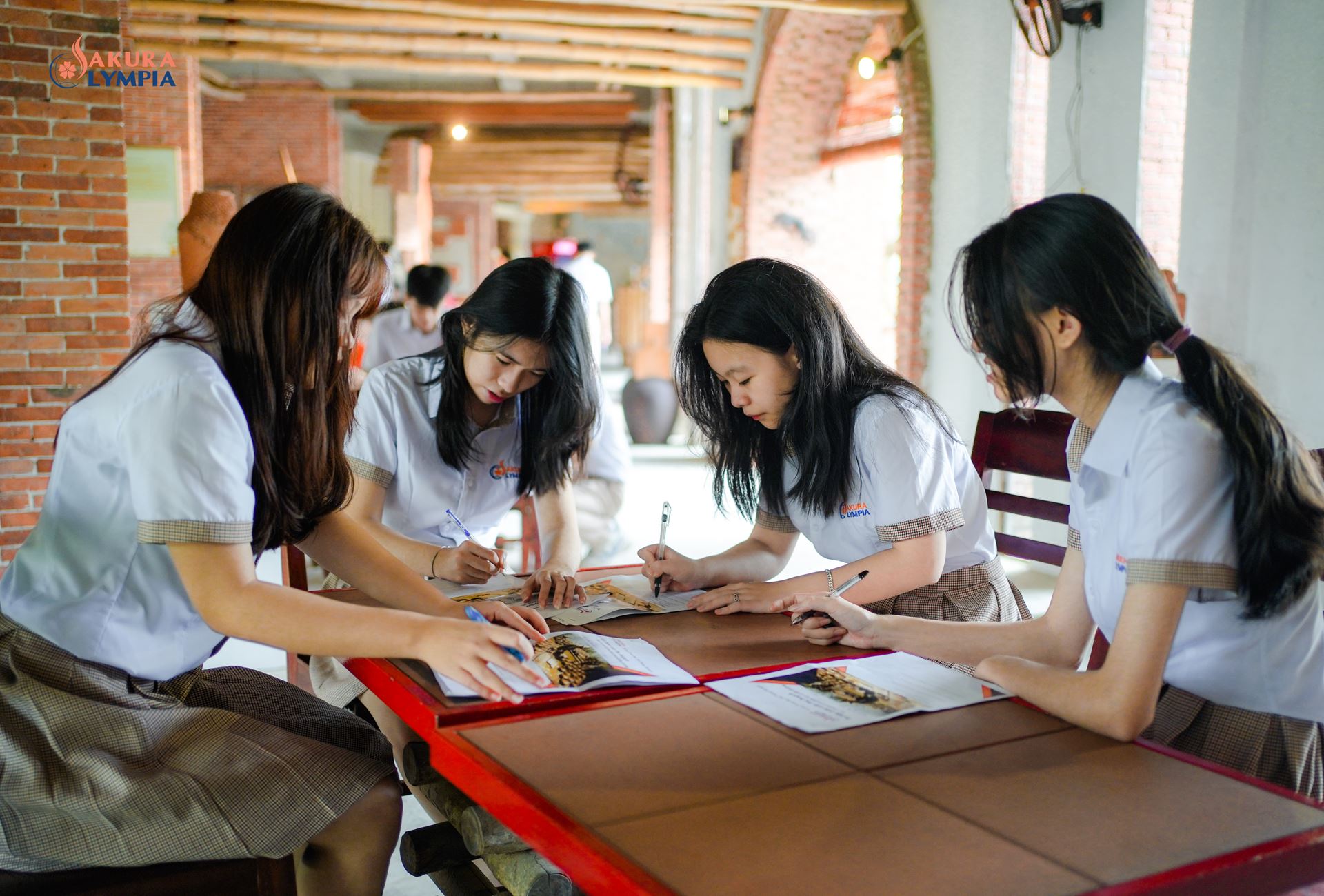
Through academic activities, integrated experiential classes, and modern learning approaches, students gradually become familiar with an international academic environment from the high school level onward.
Sakura - Olympia’s educational direction is not only about helping students achieve strong academic results, but also about nurturing learners who:
- Think independently
- Adapt confidently
- Embrace lifelong learning
- Are ready to step into a constantly changing world
Because in the future, what matters most is not simply how much knowledge students possess, but whether they have the ability to continue learning, adapting, and growing throughout their lives.
Educational Information and Knowledge Other

PREPARING CHILDREN FOR LIFE: THREE “LAYERS OF SOIL” PARENTS CAN NURTURE FROM THE EARLY YEARS

CAMBRIDGE INTEGRATED PROGRAMME AT OLYMPIA: WHAT DO STUDENTS GAIN FROM THEIR LEARNING JOURNEY?
