












[Sakura] CONNECTED THROUGH LOVE: FAMILY AND SCHOOL NURTURING THE EARLY YEARS TOGETHER
Date Submitted: 10/09/2026
For a child, family and school are not two separate worlds. A child may begin the day at home in their parents’ arms, come to school to explore the world with teachers and friends, and return home carrying new stories, emotions, and experiences.
At home, children learn about love, communication, and independence through everyday routines. At school, these lessons continue to expand through age-appropriate activities, relationships, and experiences. Although these two environments are different, both play an important role in shaping a child’s early years.
Therefore, early childhood education cannot be the responsibility of either family or school alone. When both environments share the same direction, understand the child, and work together, children have a stronger foundation to explore, experience, and grow. This is the spirit behind Sakura’s 2026–2027 school year theme: “Connected Through Love.”

CONNECTION BEGINS WITH UNDERSTANDING
One of the challenges of raising young children is that adults often notice a child’s behavior before seeing what lies behind it.
A child who refuses to cooperate may be called “stubborn.” A child who often gets upset may be seen as “difficult.” A child who does not yet do things independently may lead adults to think they are “not independent enough.” However, children aged 3–5 are still learning to recognize their emotions, communicate their needs, and adapt to new situations. Therefore, the same behavior may need to be understood from different perspectives.
At home, parents may notice changes in their child after a school day, during mealtimes, or before bedtime. At school, teachers may observe how the child plays with friends, responds to challenges, or participates in group activities. Each side holds a different part of the picture. Connection brings these observations together.
Instead of simply sharing, “This is what my child did today,” families and teachers can explore together: What happened beforehand? How might the child be feeling? Does this behavior happen in particular situations? Does the child respond in the same way at home and at school? This is the first step toward connection: rather than rushing to judge a child, adults work together to understand them.
CONNECTION MEANS GIVING CHILDREN OPPORTUNITIES TO BECOME INDEPENDENT
If understanding a child is the first step, the next is giving them appropriate opportunities to grow through their own experiences.
At preschool age, children can do many simple things themselves: put on their shoes, carry their backpack, feed themselves, tidy up their toys, or take part in simple household tasks. Yet this is also a stage when adults can easily do things for them because children are slow, still developing their skills, or may spill, drop things, or make a mess.
But for children, these seemingly small tasks are valuable opportunities to practice. When putting on their own shoes, children learn to coordinate different movements. When feeding themselves, they develop fine motor skills. When putting away their toys, they begin to develop a sense of responsibility. When taking part in age-appropriate household tasks, they experience the satisfaction of contributing and completing something on their own.
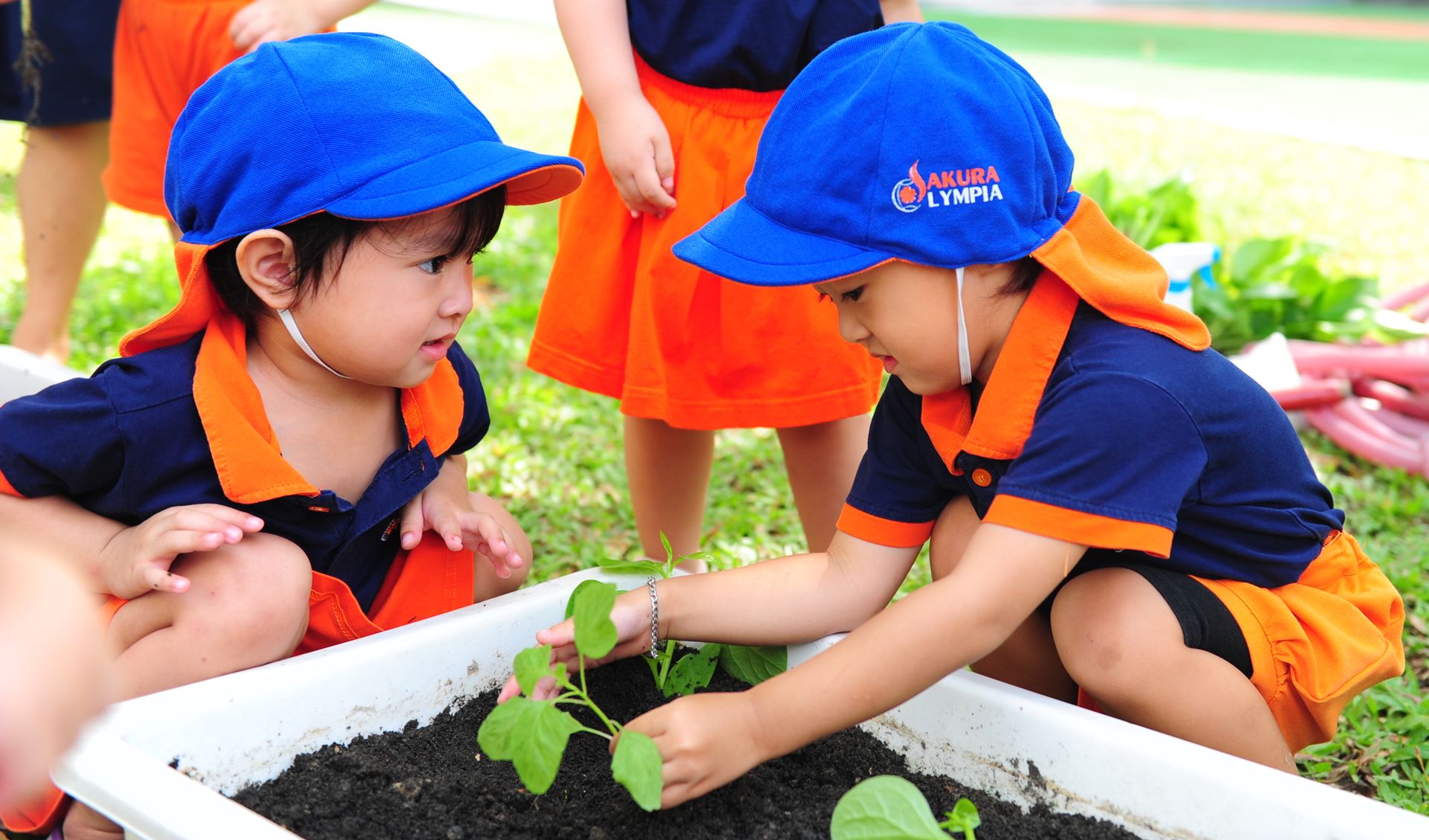
That is why families and schools need to work together to give children these opportunities: instead of always helping children finish faster, give them more time to try. At school, children can be encouraged to care for themselves, prepare their own belongings, and take part in appropriate tasks. At home, these opportunities can continue through everyday routines: picking vegetables with parents, preparing the table, putting clothes into the washing machine, or tidying up toys. Children may take a few extra minutes. They may not do things perfectly. But in return, they gain an experience no one can do for them: the experience of doing it themselves.
Love does not always mean making everything easier for a child. Sometimes, love means being patient enough to stand beside them and wait for them to do it themselves.
CONNECTION HELPS CHILDREN BUILD A SAFE “EMOTIONAL HOME”
If independence helps children discover “I can do it,” a safe emotional environment helps them feel “I am loved, and I can be myself.”
Young children learn a great deal from what they see every day. The way adults speak to one another, respond to difficulties, resolve disagreements, or listen to someone who is upset all become children’s first lessons in how to interact with others. A positive, respectful, and calm environment can help children learn through what they observe. In contrast, an environment that is frequently tense, rushed, or conflict-filled may leave children feeling confused and insecure.
An “emotional home” is a place where children know that their feelings are heard while they still have boundaries to respect. At school, this can begin when teachers listen when a child is upset, help them name their emotions, guide them in resolving conflicts with friends, and give them opportunities to try again after something does not go as planned. At home, an “emotional home” is built when parents listen, empathize, and are truly present when their child needs them. Children do not simply need an adult to be there; they need someone who can empathize with what they are experiencing.
WHEN FAMILY AND SCHOOL ARE “CONNECTED THROUGH LOVE”
Understanding children, giving them opportunities to become independent, and helping them develop a sense of emotional security all depend on meaningful connection and collaboration between family and school. “Connected Through Love” is therefore more than a connection between parents and teachers. It is about adults working together to create an environment where children are loved, heard, trusted, and given opportunities to grow. A healthy tree needs good soil, and children also need an environment that is safe, warm, and rich in experiences so they can grow with confidence.
Throughout the 2026–2027 school year, Sakura hopes to work together with families to nurture this “soil” each day — so that love becomes a source of support, connection becomes a source of strength, and every child can grow naturally and confidently in their own way.
Kindergarten News Other

[Kindergarten] MID-AUTUMN OUTING: LANTERNS THAT LIGHT UP LOVE

[Kindergarten] A JOURNEY OF LOVE: GROWING TOGETHER THROUGH EARLY CONNECTIONS
