






THE CAMBRIDGE LOWER SECONDARY STANDARDIZATION JOURNEY AT OLYMPIA
Date Submitted: 01/10/2026
On 19 August 2026, Olympia Primary, Middle & High School – Cambridge International School (VN291) was officially recognized as a Cambridge Lower Secondary School, offering Cambridge Lower Secondary and Cambridge Lower Secondary Checkpoint. This marks an important step in completing the connected Cambridge pathway from Cambridge Primary to Cambridge Lower Secondary for Primary and Lower Secondary students.
Achieving this milestone has required many months of preparation across the Sakura - Olympia School System, from curriculum research, reviewing and developing staff capacity, and developing educational plans to standardizing teaching methods and preparing learning resources, assessment systems, and facilities. This process has not simply been about meeting the requirements for implementing Cambridge Lower Secondary; it has also provided an opportunity for the team to review the entire system and progressively raise professional standards, with a focus on creating a more connected learning journey that better responds to the individual differences of each student.
STANDARDIZATION STARTS WITH PEOPLE
An educational program can only realize its full value when it is delivered by a team with the capacity to understand the curriculum, master the teaching methods, and translate educational directions into learning experiences that are appropriate for students. Therefore, from the early stages of preparing for Cambridge Lower Secondary, Olympia has focused on reviewing and developing the professional capacity of its teaching team.
This process has been carried out across multiple areas, including professional expertise, English language proficiency for teaching, experience, familiarity with the Cambridge curriculum, and teaching and learning organization skills. At the same time, teachers have studied the Curriculum Framework, Learning Objectives, Progression, assessment methods, and professional learning resources relevant to their respective subjects. This provides the foundation for the team not only to understand what the curriculum teaches, but also to understand how students need to develop at each stage.
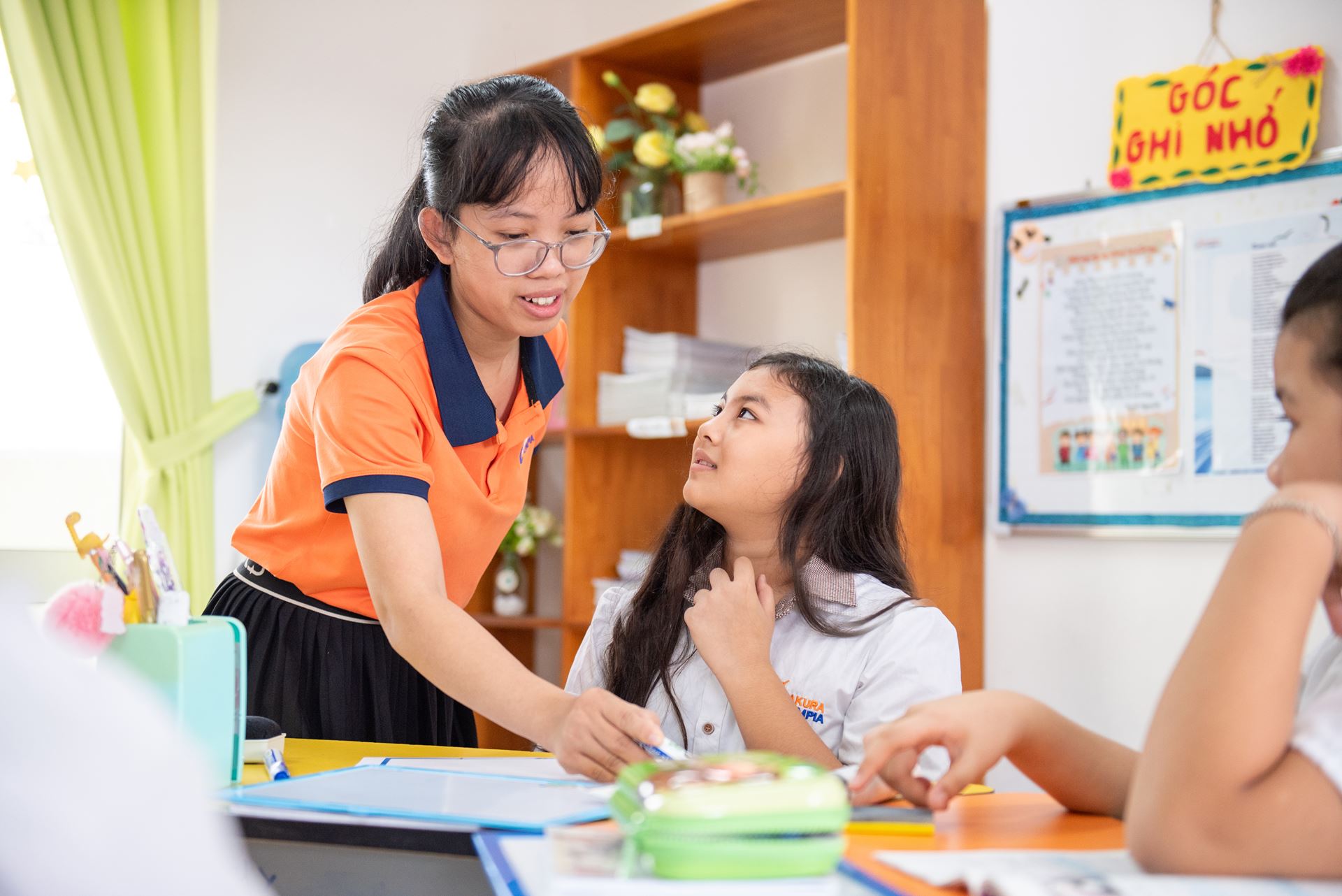
Building on this foundation, developing staff capacity aims at a deeper shift in the role of teachers: from delivering lessons to guiding learning methods, coaching thinking, and designing learning journeys. Rather than focusing solely on what content needs to be taught and what tasks need to be completed, teachers need to observe the learning process, identify each student's starting point and different needs, and determine appropriate levels of support, challenge, and learning approaches.
This also provides the foundation for differentiated and personalized learning to be incorporated into the design and organization of learning. Beyond this, Olympia aims to empower students with an increasing ability to understand what they are learning, where they are in their learning journey, and what they need to do next – gradually becoming more active participants in their own learning journey.
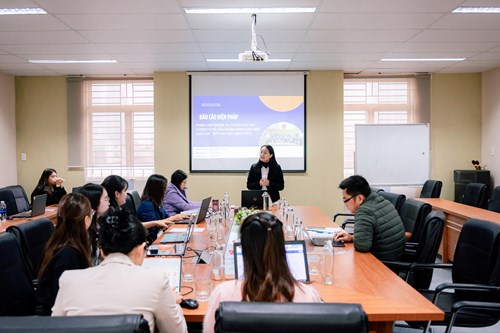
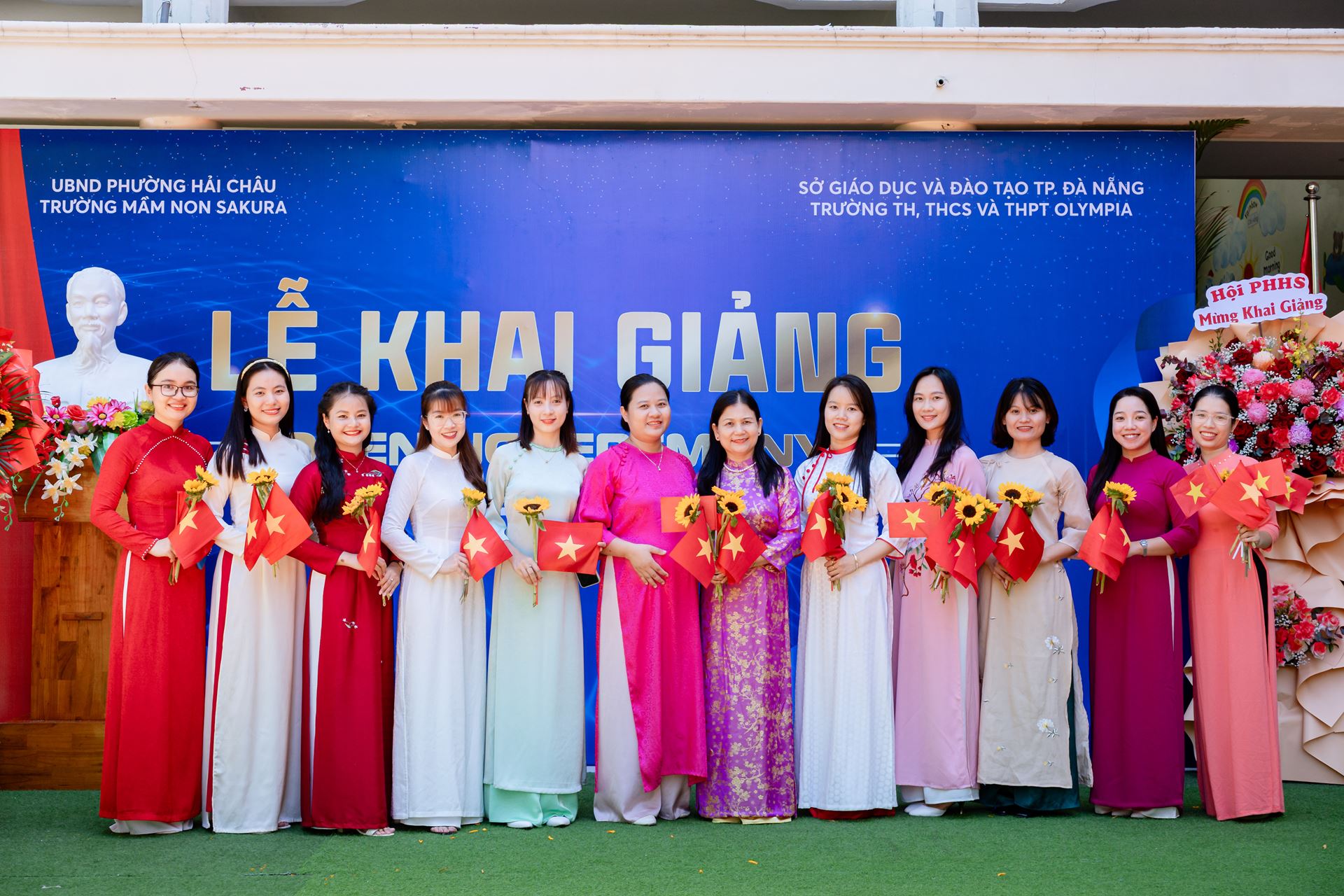
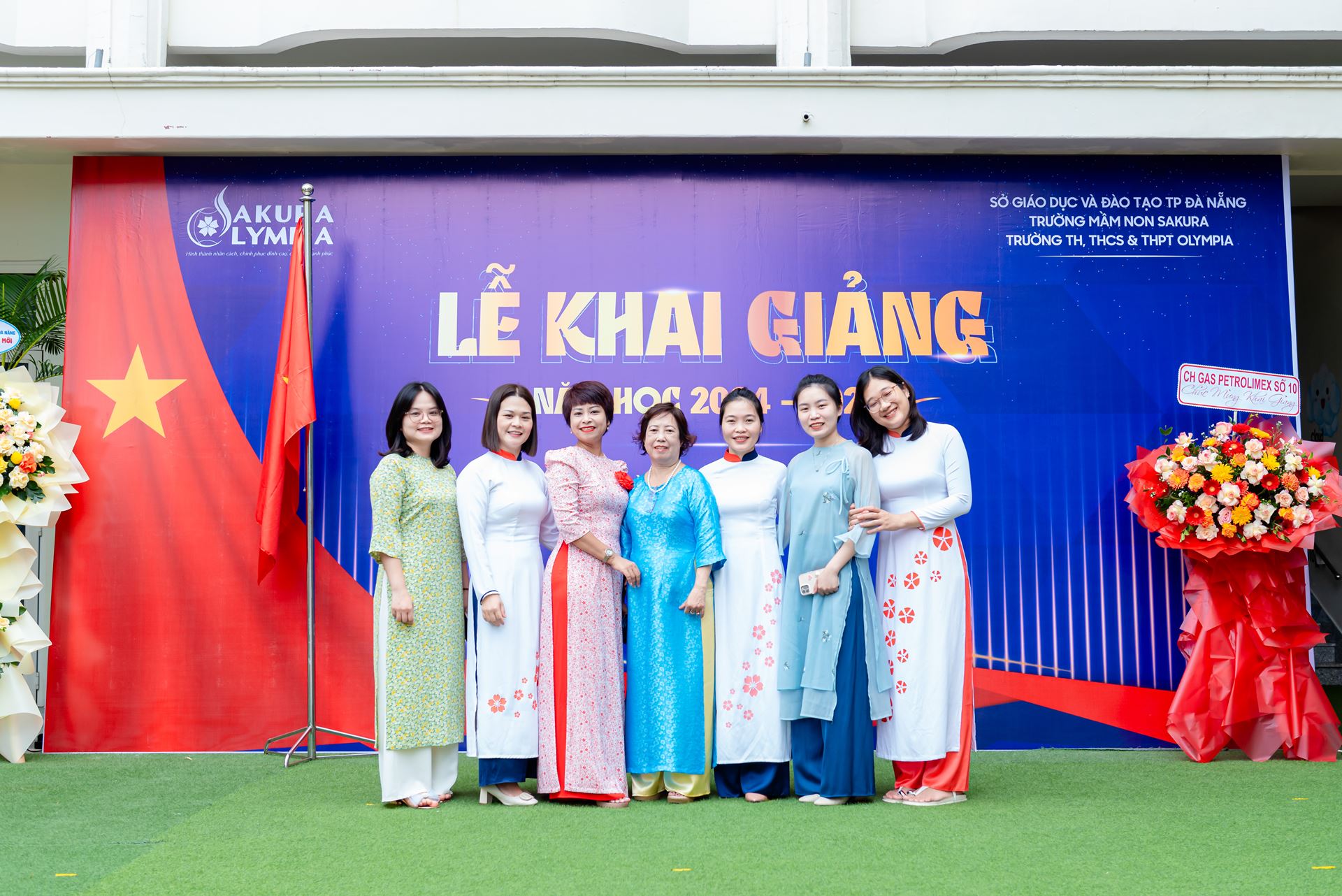
The 2025–2026 School-level Excellent Teacher Competition provided an opportunity for teachers to reflect on their professional expertise while learning from and exchanging experience with colleagues.
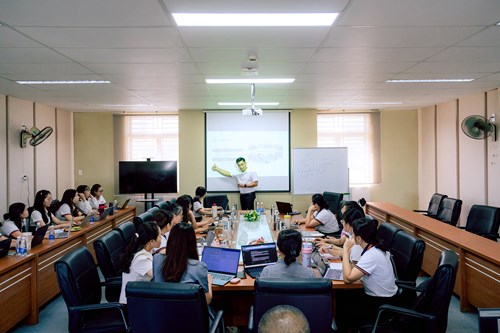
Two summer training sessions on differentiated and personalized learning equipped teachers with the methods needed to move from the role of knowledge providers to learning guides, thinking coaches, and designers of learning journeys tailored to each student.
STANDARDIZING THE CURRICULUM TO CREATE A CONNECTED LEARNING PATHWAY
Implementing the Cambridge Lower Secondary curriculum is not simply a matter of adding another program to the timetable. It involves addressing a key challenge: how can the content of the three Cambridge subjects – English as a Second Language (ESL), Mathematics, and Science – be harmoniously integrated with the Vietnamese National General Education Curriculum to create a unified learning pathway, minimize duplication, and avoid placing unnecessary pressure on students?
To address this challenge, the academic team implemented a systematic and rigorous standardization process. First, teachers conducted in-depth research into the Cambridge Curriculum Framework, Learning Objectives, and Progression for the three Cambridge subjects, while thoroughly mastering the Required Outcomes of the Vietnamese National Curriculum. Next, subject teams carried out a detailed mapping matrix between the two curricula to clearly identify similarities, differences, intersecting concepts, and potential learning gaps.
Based on these findings, the school developed an Integrated Program with a unified learning pathway that merges overlapping content and optimizes time allocation. This ensures that all required outcomes of both programs are fully met while eliminating unnecessary redundancy, preventing student overload. Finally, detailed subject schemes of work were crafted to explicitly define roles and collaborative dynamics between Vietnamese and International teachers, ensuring seamless co-teaching and mutual pedagogical support in every lesson. This rigorous multi-month process underwent continuous cycles of development – implementation – review and feedback – adjustment, ensuring that every component of the curriculum was seamlessly interconnected before entering the classroom.
The development of the Cambridge Lower Secondary curriculum went through a process of development – implementation – review, feedback – adjustment during the 2205–2026 academic year.
Standardizing the curriculum also required a shift in how the team approached teaching and learning. While a traditional approach often begins with what teachers will teach, what tasks students will complete, and assessment to determine the results, lesson design at Olympia shifts the focus to what students need to achieve, where they are now, and what their next step should be to make progress.
Therefore, each Learning Objective is not viewed as an isolated goal for a single lesson, but is placed within a continuous developmental progression: what foundation students have built previously, what they need to achieve at the present stage, and how those knowledge and skills will continue to develop in subsequent stages.
From this perspective, teaching and learning become more flexible. While working toward the same learning objective, students may be given tasks with different levels of support or challenge based on their individual needs and readiness. Data from observations, classroom questions, assignments, learning products, and ongoing assessments are used by teachers to adjust support or provide appropriate extension. In other words, assessment is not only used to determine what students have achieved, but also becomes data that helps teachers and students identify their next step in learning.
STANDARDIZING THE LEARNING ENVIRONMENT
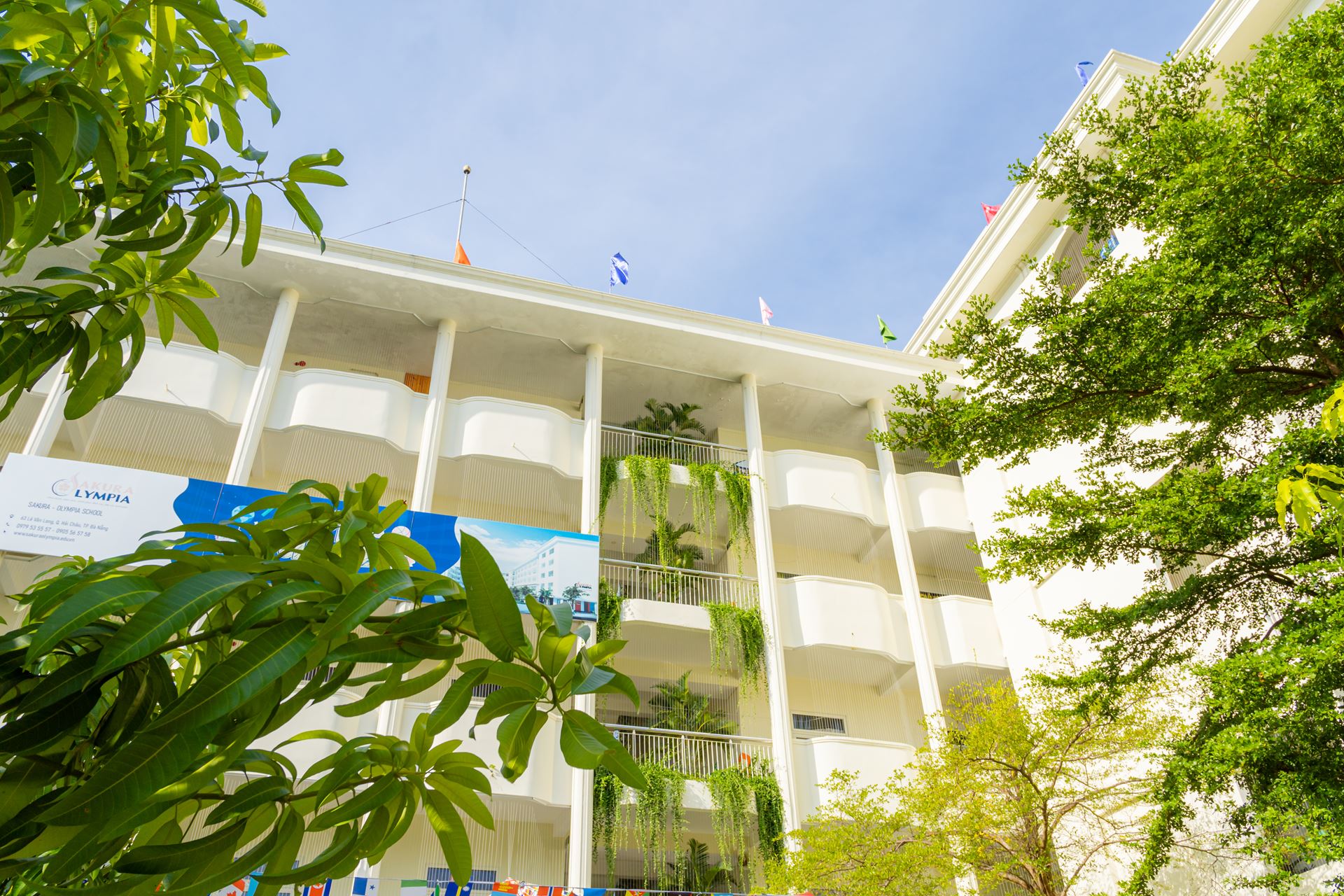
As a program that emphasizes connecting knowledge with real-world applications, Cambridge Lower Secondary requires a learning environment that not only meets spatial requirements but also enables students to practice, explore, and actively participate in the learning process. Therefore, during the summer of 2026, Olympia focused on upgrading and completing various facilities to establish a suitable foundation for implementing the program.
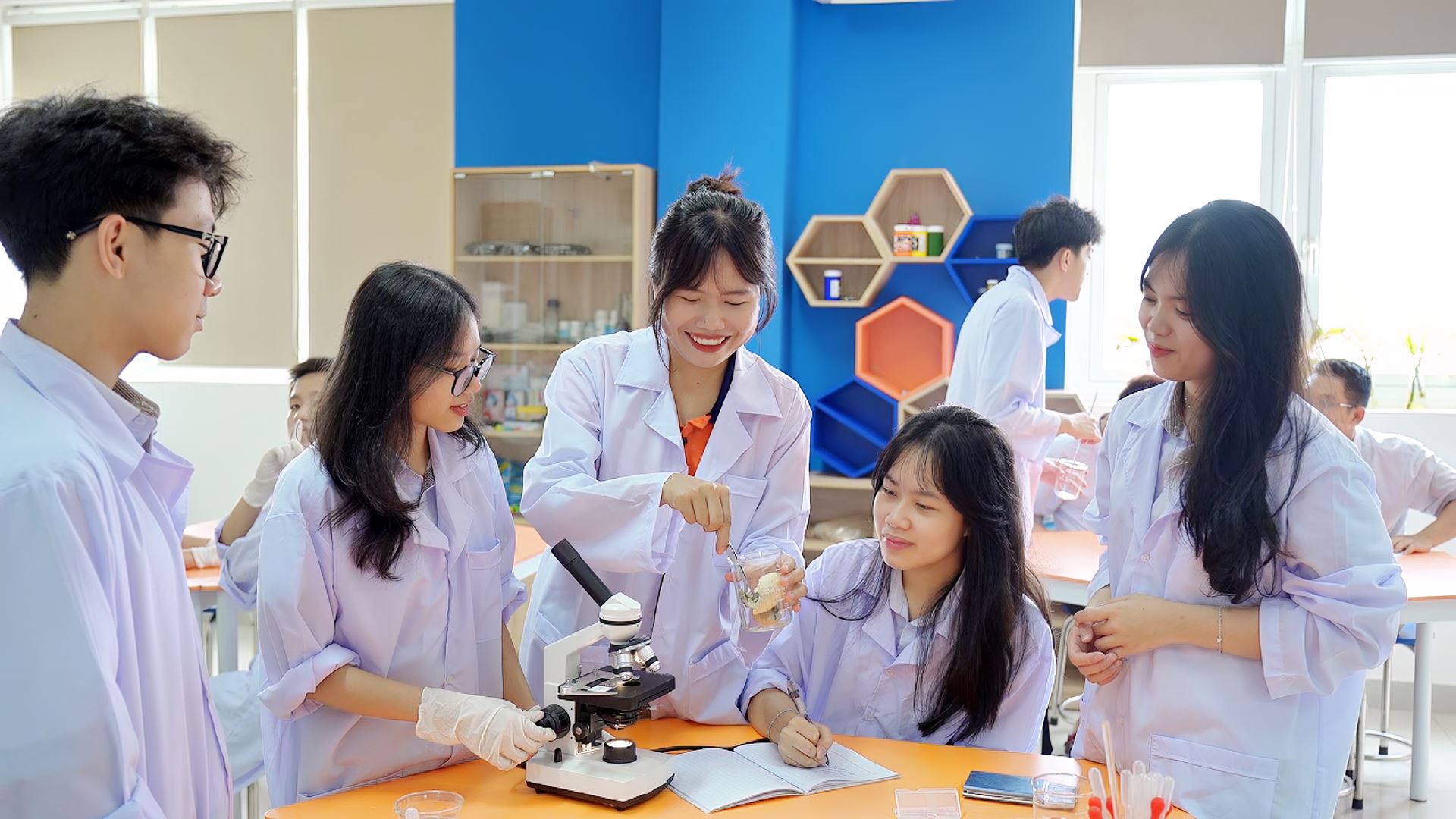
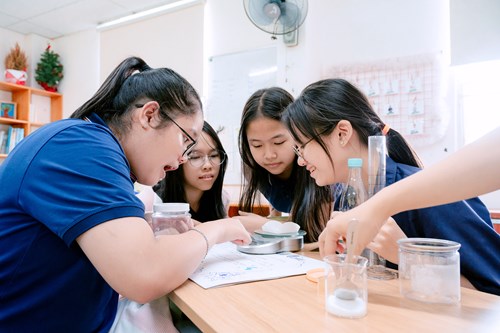
Among these, the Science Lab and storage and management systems were key areas of focus. The Science Lab was prepared for practical Science activities, with spaces and equipment supporting the study of Chemistry, Biology, and Physics, together with a Prep Room, lockable chemical cabinets, and safety equipment. The Secure Storage system for examination materials was also upgraded in accordance with requirements, ensuring the necessary management and security procedures.
At the same time, Olympia continued to improve the Computer Lab, classrooms, and library areas for students in Grades 6–9, adding equipment to support interactive learning. Learning resources were also expanded to include digital learning materials, information technology platforms, Microsoft 365 Education, Digital Portfolio, high-speed Wi-Fi, and a selection of English-language books appropriate for Lower Secondary students.
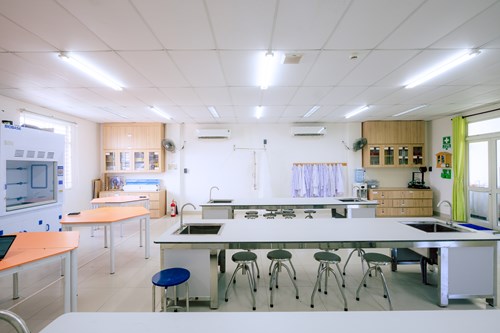
Science Lab
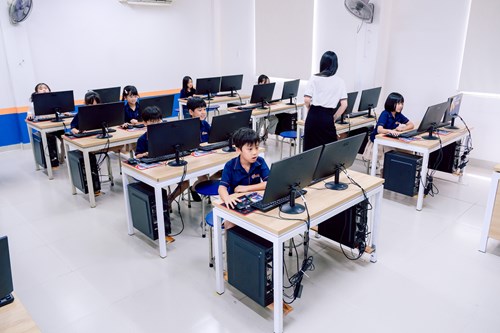
Computer Lab
This preparation serves one unified goal: to create an environment where students can increase their opportunities to practice and apply knowledge to real-world contexts.
The standardization process for implementing Cambridge Lower Secondary has encouraged Olympia to review and connect elements across the entire system, from the curriculum and academic team to the learning environment, with the aim of achieving holistic development and continuously improving the quality of teaching and learning. These changes are reflected not only in the three Cambridge subjects, but are also gradually becoming part of the learning experience for Lower Secondary students at Sakura - Olympia – from how they learn, ask questions, practice, and collaborate to how they actively monitor and develop their own learning journeys.
Alongside the approval to implement Cambridge Lower Secondary, Olympia will organize its first Cambridge Lower Secondary Checkpoint examination in 2027. This will be an important milestone for teachers and students to reflect on their learning journey, recognize what they have achieved, and continue refining the Cambridge Lower Secondary curriculum developed by the school.
We look forward to and place our hopes in the achievements of Olympia’s teachers and students in this first Cambridge Lower Secondary Checkpoint assessment!
Secondary News Other

Summer Camp 2026 "Around the World Quest": A Summer Adventure Around the World Through Science and English

Learning Journey 2026 “Beyond the Sky...” – A Journey of Exploring the World and Discovering Oneself
