














PREPARING CHILDREN FOR LIFE: THREE “LAYERS OF SOIL” PARENTS CAN NURTURE FROM THE EARLY YEARS
Date Submitted: 26/08/2026
The world our children will grow up in is constantly changing. Technology, AI, and social changes may make what we know today very different in the future. Therefore, it is important not only to equip children with the knowledge they need, but also with the abilities that will help them stand confidently in an ever-changing world.
During the “Preparing Children for the Journey Ahead” talk at the Beginning-of-Year Parent Meeting for the 2026–2027 school year, Ms. Phan Thi Thu Hang – Academic Coordinator of Sakura Kindergarten invited parents to reflect on the things that truly matter and that adults can nurture in children from their earliest years. These are three essential life foundations, which are not developed in a single day or through a single book, but through the environment in which children live and grow every day.
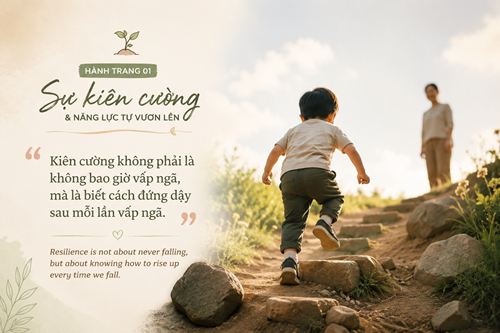
THE FIRST GIFT: RESILIENCE AND THE ABILITY TO RISE ON THEIR OWN
Parents cannot walk alongside their children through every stage of life. As they grow up, children will have to face changes, challenges, and moments when they stumble. Therefore, one of the most important gifts parents can give their children is resilience and the ability to rise on their own – the ability to get back up after difficulties, reflect on what happened, learn from the experience, and keep moving forward rather than waiting for someone else to solve the problem for them.
For young children, this ability is not developed simply through being told to “be strong.” It is nurtured through appropriate everyday experiences: being allowed to try, to make mistakes, to solve age-appropriate problems, and to have opportunities to overcome small challenges.
THE SECOND GIFT: WHOLE HEALTH
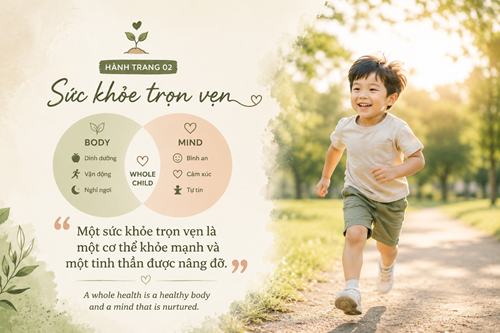
For children to be truly healthy and happy, they need whole health, encompassing both physical and mental well-being. Children need strong, healthy bodies, developed through nutritious meals, physical activity, and healthy daily habits. At the same time, they need to grow without constantly worrying about having to achieve, disappointing their parents or teachers, or becoming overly dependent on others’ opinions.
A healthy childhood, therefore, is not measured only by how well a child performs academically. It is also about whether they feel safe, have time to rest, have opportunities to be active and play, and experience balance in their emotional lives. These are the foundations that enable children to learn, explore, and develop sustainably.
THE THIRD GIFT: THE ABILITY TO RECOGNIZE TRUE VALUE
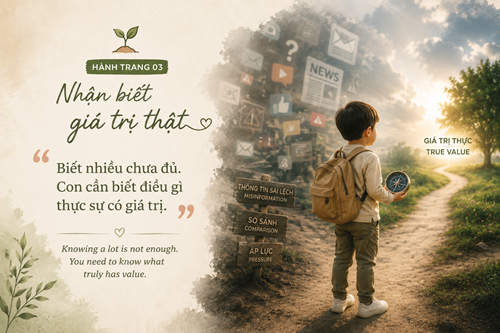
Children are growing up in a “sea of information” from social media, television, newspapers, and many other sources. Within this environment, accurate and inaccurate information, as well as truth and falsehood, can easily become mixed together. Therefore, another important gift children need is the ability to recognize true value: gradually developing the awareness to understand what is valuable, what is inappropriate, and which information may have a negative impact on them.
This ability cannot be developed simply by teaching children that “this is right and that is wrong.” It needs to be nurtured through the way children build relationships with friends, solve problems, experience different situations, and learn to balance their emotions.
These three gifts – resilience, whole health, and the ability to recognize true value – are not things that can be bought or handed to children all at once. They need to be nurtured every day, within the environment where children live and grow.
“LOOK AT THE TREE TO IMPROVE THE SOIL; LOOK AT THE CHILD TO IMPROVE OURSELVES”
For a tree to grow strong and healthy, a gardener does not look only at its branches and leaves. When the tree is not growing as expected, they look at the soil and the roots to understand why.
The same is true for children. What children demonstrate may reflect what they observe and experience within their family environment. Children learn not only through words, but also through what they feel and observe.
From this image, Ms. Hang introduced three “layers of soil” that parents can nurture to create the foundation for the life gifts above.
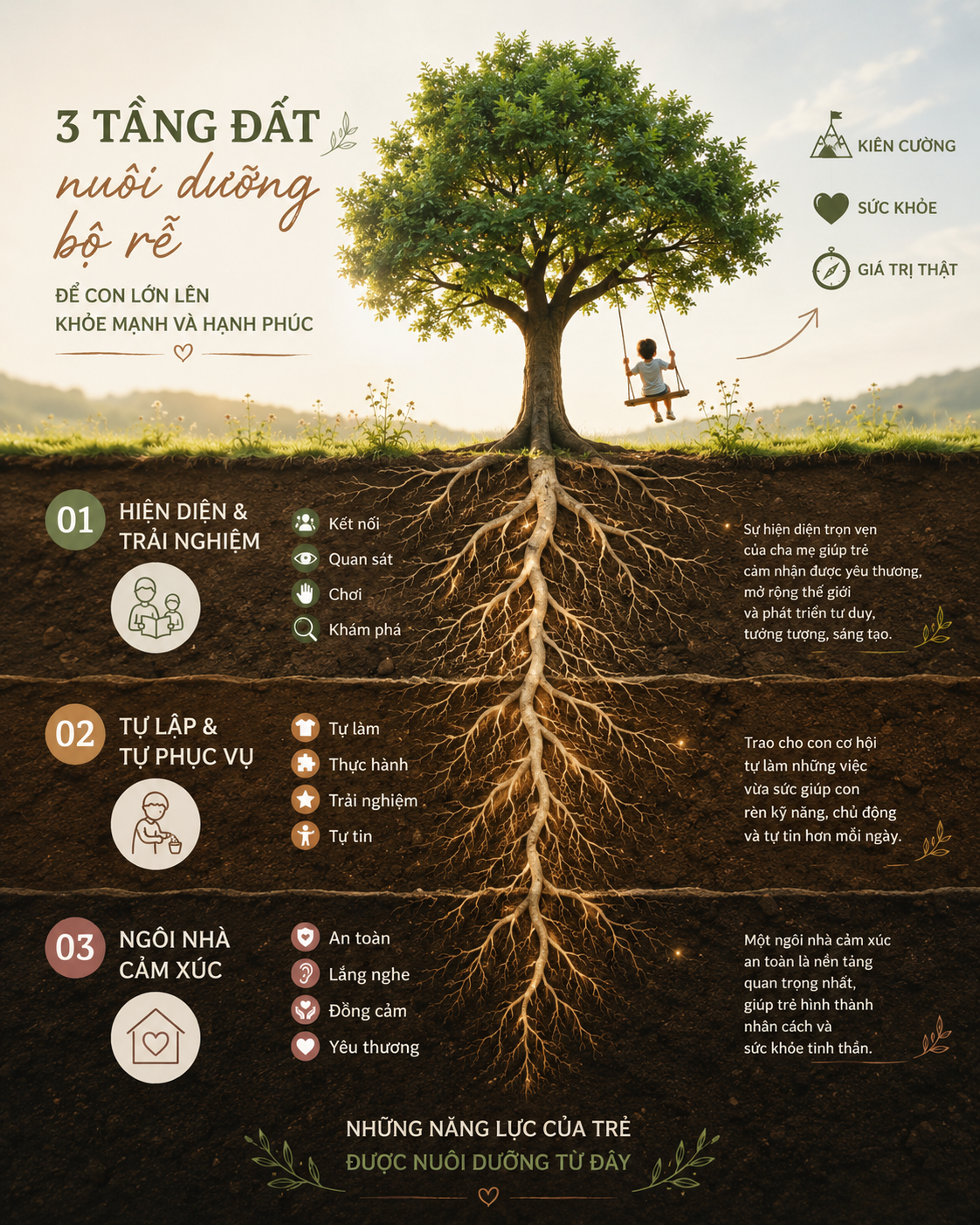
THE FIRST LAYER OF SOIL: BEING PRESENT AND EXPERIENCING THE WORLD TOGETHER
In the early years, children explore the world through their senses, observation, and direct experience. What children need from their parents, therefore, is not simply their physical presence, but their full presence – being genuinely attentive, listening, and connecting with them.
When parents are truly present, everyday moments can become meaningful learning experiences: talking together, reading, playing, making toys from simple materials, or discovering something new. Rather than simply giving children ready-made toys, parents can offer them materials that encourage them to think, imagine, and create.
More importantly, when parents take part in these experiences, children not only develop their thinking and creativity but also feel that “Mom and Dad are really here with me.” These seemingly small moments of connection can become beautiful memories and an important emotional foundation as children grow.
THE SECOND LAYER OF SOIL: EXPERIENCE AND INDEPENDENCE
At the age of 3–5, children are already capable of taking care of themselves in many age-appropriate ways. Yet, out of love or a desire to make things faster and easier, adults sometimes unintentionally do things for them.
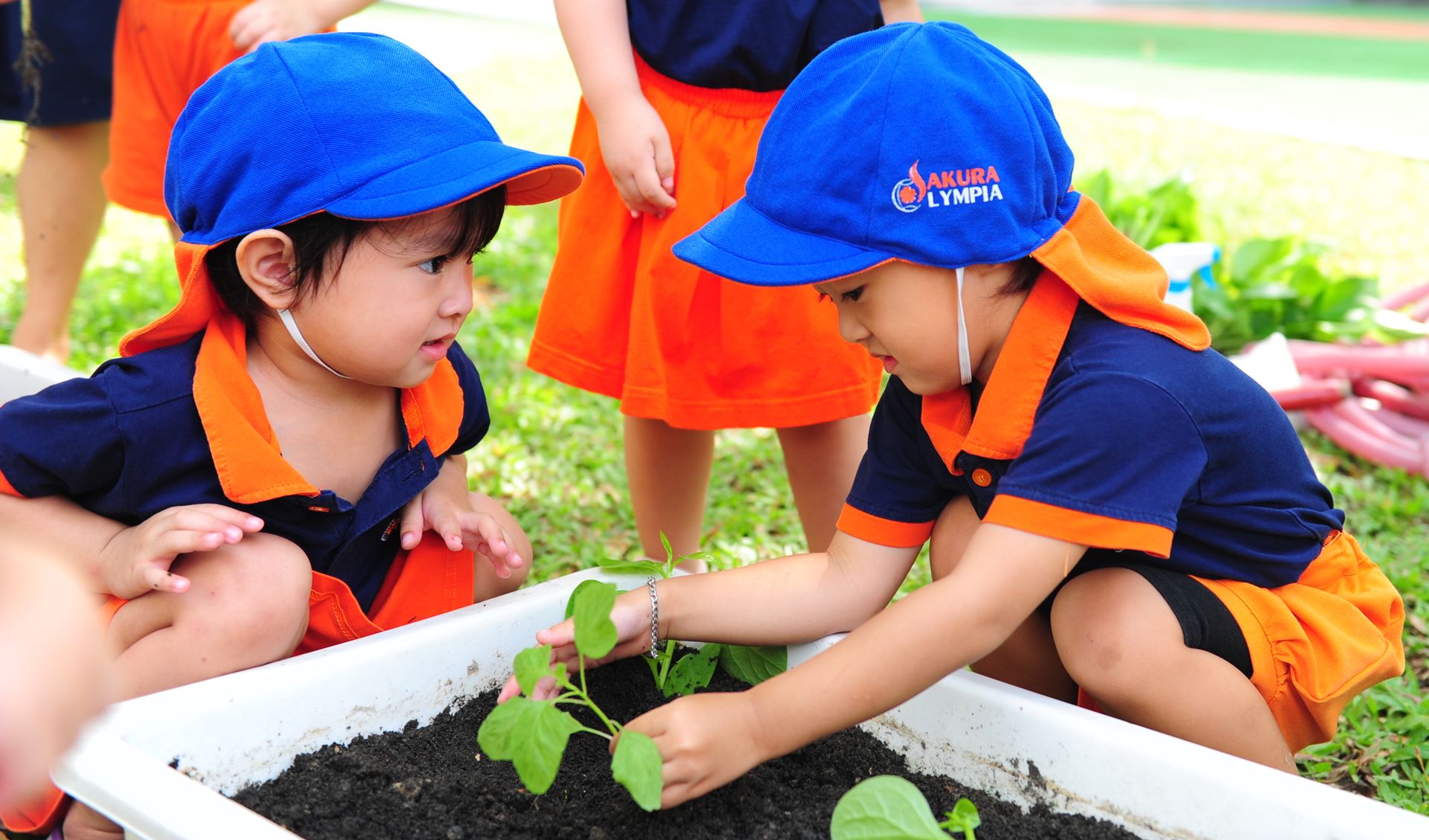
Being fed may be quicker. Having parents put on their shoes may be neater. But when children feed themselves, even if they spill food, those very actions help them develop coordination and gradually become more capable, proactive, and confident.
Parents can start with simple everyday tasks: inviting children to help pick vegetables, set the table, wipe the table, put clothes into the washing machine, or tidy up their toys. Giving children opportunities to do things for themselves is also giving them the opportunity to feel that they are capable and that what they do matters.
THE THIRD LAYER OF SOIL: THE “EMOTIONAL HOME”
This is the deepest layer of soil and plays the most important role.
The environment children grow up in is likely to shape what they observe and experience. A family that is joyful, respectful, and calm when facing difficulties can naturally help children learn positive ways of interacting with others. In contrast, an environment that is frequently tense, rushed, or filled with anger may leave children feeling confused and insecure.
Therefore, parents educate their children not only through what they say, but also through how they live, communicate, and respond to everyday situations. When children are sad, parents can listen. When they succeed, parents can share their joy. When they face difficulties, parents can stay by their side so they know they are not alone. This presence, empathy, and support help children feel secure and gradually develop greater emotional maturity.
PARENTS DO NOT HAVE TO BE PERFECT – JUST 1% BETTER EACH DAY
The three gifts – resilience, whole health, and the ability to recognize true value – can become foundations that help children confidently face the future. But for these abilities to grow, children need good “soil”: parents who are truly present, opportunities to experience and become independent, and a safe emotional home in which to grow.
Parenting is also a journey of growth for adults. Parents do not need to become perfect overnight. They only need to be 1% better each day, gradually creating a warm, compassionate, positive, and grateful environment where children have the conditions to grow and thrive.
Because parents cannot walk alongside their children through every stage of life, but they can give them the right tools and nurture strong foundations so that children can confidently move forward on their own.
A MOMENT FOR PARENTS TO REFLECT:① Yesterday, did I spend 15 minutes truly being present with my child – without my phone or work? ② In raising my child, am I doing too much for them simply because I want things to be faster and more convenient? ③ When my child shows an inappropriate behavior or says something inappropriate, do I immediately scold them, or do I pause and look at the “emotional soil” I am creating? These are not questions designed to judge whether a parent is “right” or “wrong.” They are moments to pause, reflect, make adjustments, and grow together through the journey of parenting. |
Educational Information and Knowledge Other

CAMBRIDGE INTEGRATED PROGRAMME AT OLYMPIA: WHAT DO STUDENTS GAIN FROM THEIR LEARNING JOURNEY?

EDUCATION FOR A CHANGING WORLD
