












[PRIMARY] GROWING TOGETHER: LEARNING TO PROTECT OURSELVES, RESPECT AND SUPPORT OTHERS
Date Submitted: 22/09/2026
Growing up is not only about physical development or gaining more knowledge. It is also a journey of gradually understanding oneself: understanding one’s body, recognizing boundaries that should be respected, and knowing how to stay safe. For Primary students, sexual education therefore goes beyond providing knowledge. It should begin with practical skills that help children recognize situations, respond appropriately, and seek support when needed.
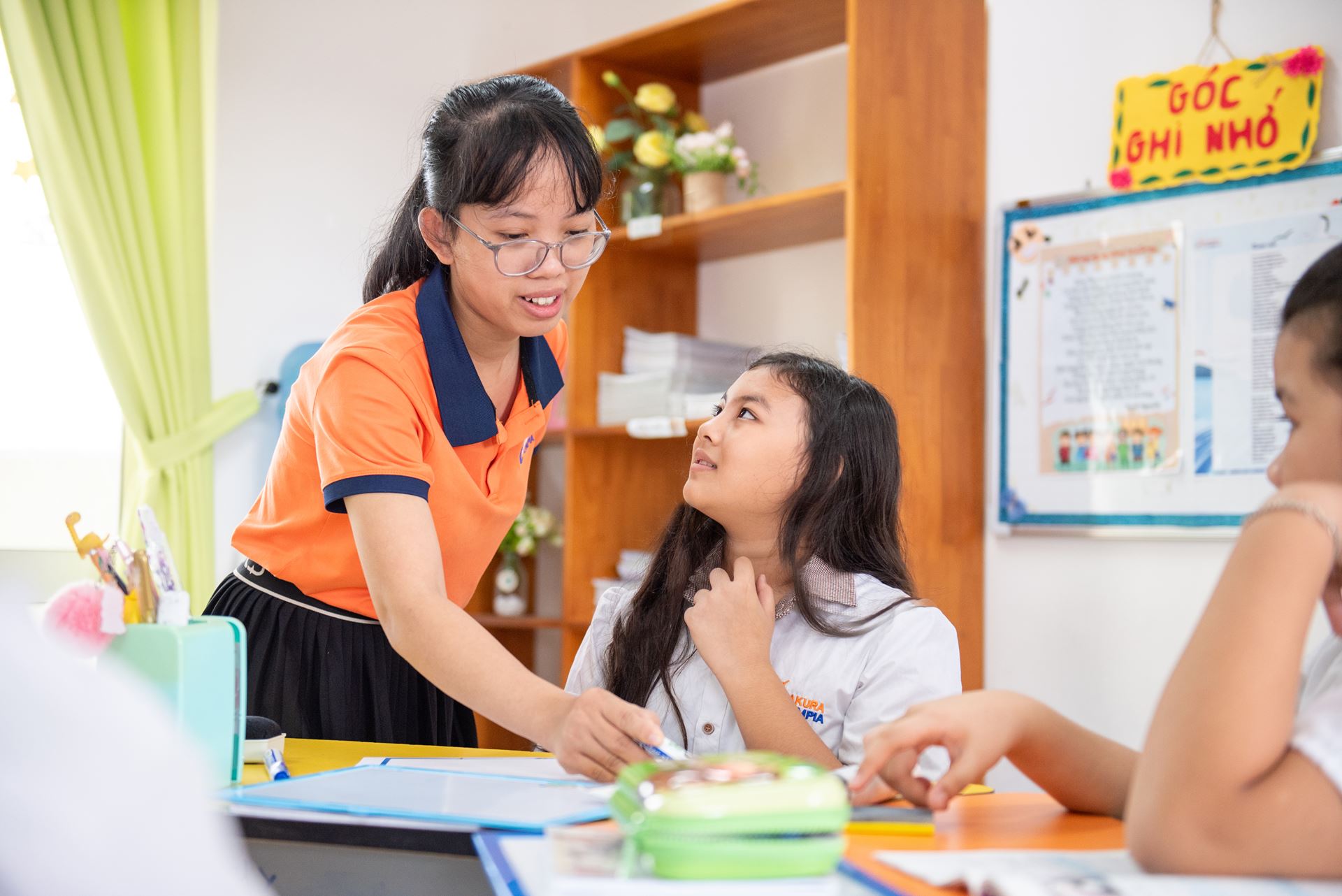
On September 21, 2026, Grade 3–5 students at Olympia took part in the “Growing Together” sexual education activity, led by Assoc. Prof. Dr. Nguyen Thi Hang Phuong, a lecturer at the Faculty of Psychology, Education and Social Work, The University of Danang – University of Education. With expertise in Psychology and Social Work, she has extensive teaching experience in areas including psychological counseling, child psychology, learning skills, and social work.
Through age-appropriate scenarios, discussions, interactive activities, and role-play, students explored their bodies and personal boundaries; how to recognize safe, cautionary, and unsafe situations; how to practice “Say No – Move Away – Tell”; and how to respect and support their friends. These are the key areas designed to meet the developmental and cognitive needs of Grade 3–5 students.
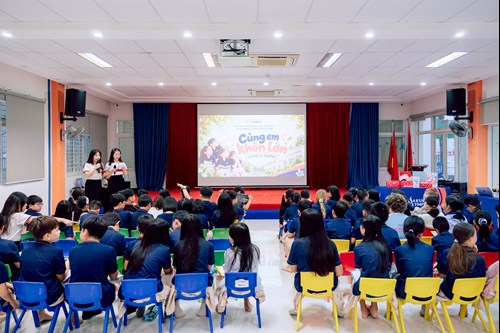
The “Growing Together” sexual education activity for students in Grades 3, 4, and 5
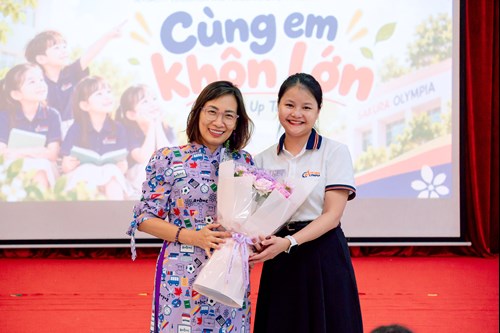
The activity was led by Assoc. Prof. Dr. Nguyen Thi Hang Phuong, a lecturer at the Faculty of Psychology, Education and Social Work, The University of Danang – University of Education.
PROTECTING OURSELVES – THE FIRST SKILL EVERY CHILD NEEDS
First and foremost, students need to understand that their bodies belong to them and they have the right to be protected. They were guided to recognize private areas, understand personal boundaries, and pay attention to emotional and physical signals when a situation makes them feel uncomfortable or unsafe.
Students then practiced distinguishing between safe, cautionary, and unsafe situations through questions and scenarios drawn from everyday life. When they encounter something inappropriate, they learned a clear sequence of actions: “Say No – Move Away – Tell.” This means expressing refusal clearly and appropriately, moving away from the situation, and telling a trusted adult who can provide support.
These skills need to be practiced so that children can do more than simply know what they should do—they can respond calmly when faced with a real-life situation. Above all, “Growing Together” reinforces an important principle: their own safety always comes first.
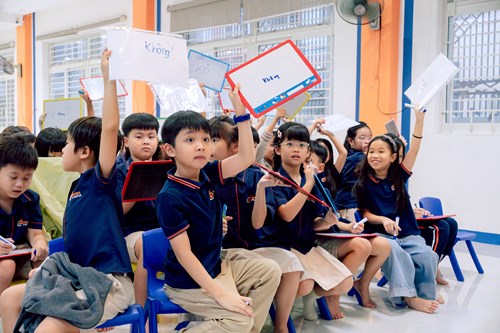
Students identify inappropriate situations and practice how to say “no”
FROM SELF-PROTECTION TO RESPECTING FRIENDS
Once students understand how to protect themselves, they can begin to broaden their awareness of the safety of those around them. They learn that everyone has their own feelings, bodies, and boundaries that deserve to be respected. Respecting others’ boundaries is therefore an important part of creating a safe and trusting school environment.
This respect begins with simple, everyday actions: not teasing others, not encouraging or supporting behavior that may hurt someone, and not taking, recording, or sharing images or content that could cause harm to a friend. When they witness an inappropriate situation, students are encouraged to speak up and seek support from a trusted adult rather than remaining silent or trying to solve the problem on their own.
“Supporting a friend” does not mean that children have to handle every situation themselves. What matters is that they learn to recognize unsafe situations, avoid supporting harmful behavior, and seek help from the right person. Through this, students gradually develop a sense of responsibility for the safety of their friends and those around them.
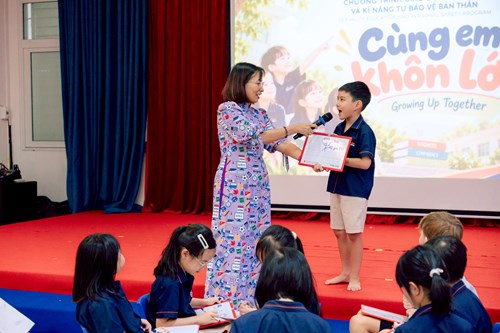
Not supporting harmful behavior, speaking up, and seeking help can help protect both friends and oneself.
LEARNING THROUGH SITUATIONS TO KNOW HOW TO RESPOND WHEN IT MATTERS
To ensure that safety knowledge goes beyond simply “knowing,” students were placed in specific situations where they could think, make choices, discuss, and role-play. They had opportunities to practice saying “No,” moving away from an unsafe situation, telling a trusted adult, and responding appropriately when they see a friend who needs support.
This approach helps students move from awareness to action, while also understanding that asking for help is nothing to be ashamed of. When their own safety or someone else’s is at risk, reaching out to a trusted adult is an important choice.
GROWING UP MEANS KNOWING HOW TO STAY SAFE AND RESPECT OTHERS
“Growing Together” aims to help students gradually develop essential skills and awareness that can support them throughout life: understanding their bodies, recognizing boundaries, prioritizing their own safety, knowing how to seek support, and respecting others.
By first learning to protect themselves, students gradually learn to respect and support their friends through actions that are appropriate for their age. This is an important part of growing up: not only knowing how to care for and protect themselves, but also learning to care for and respect others while contributing to a safe, positive, and respectful learning environment.
Primary News Other

TOUCHING THE MOON 2026: A MOONLIT SEASON OF LOVE

[OLP] AUTONOMOUS KNOWLEDGE - PERSONALIZED JOURNEYS: An Educational Direction for the 2026–2027 School Year
